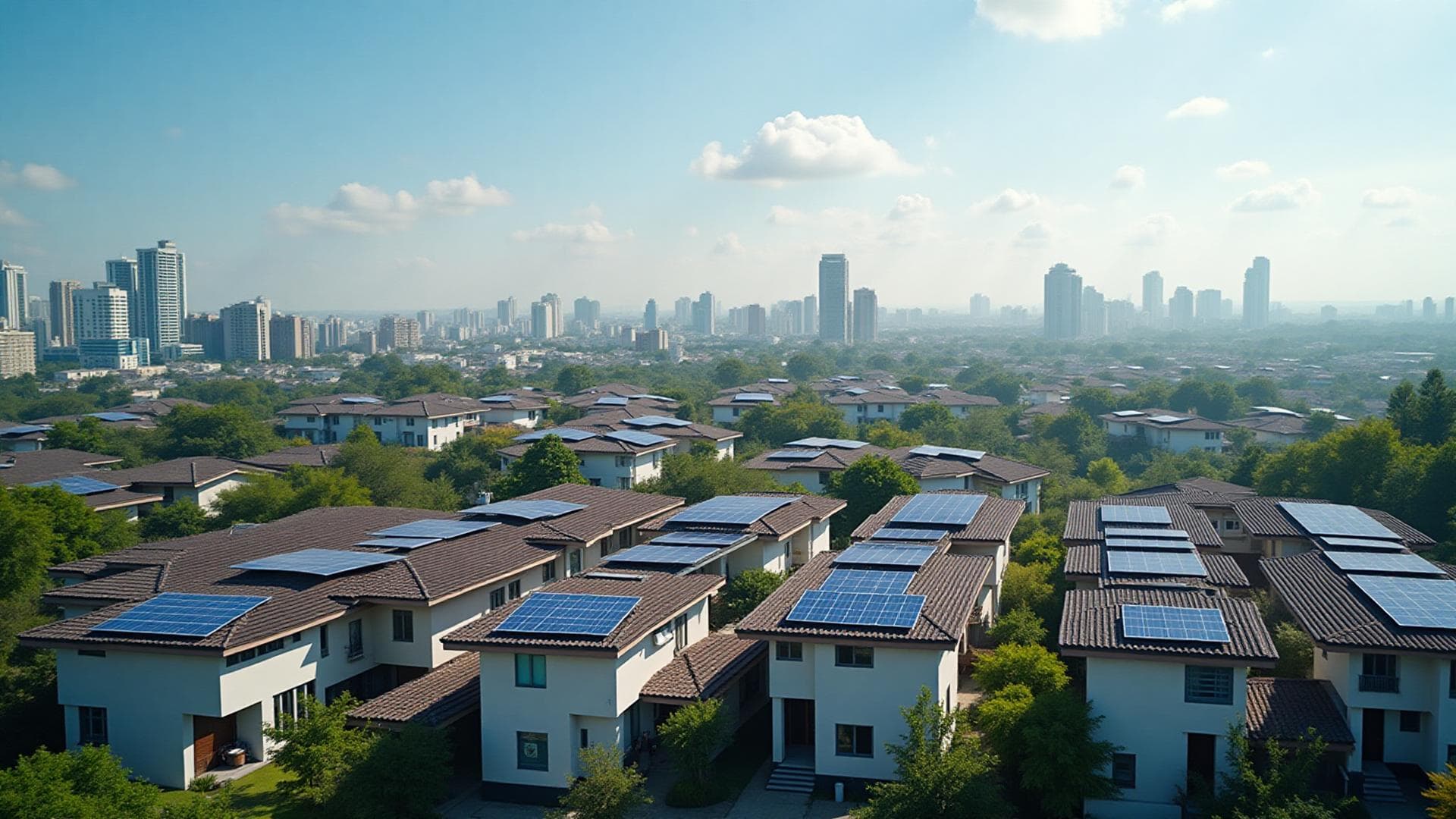
Your singil sa ilaw arrives. Instead of wincing at the total, you're checking how many peso credits Meralco owes you. That's net metering Philippines homeowners are waking up to in 2026 — and Meralco is legally required to participate. The framework has been in force since 2013. More Filipino homes qualify than most realize. Here's exactly how it works and whether it's sulit for your situation.
Ano ang Net Metering? (And Why Your Meralco Bill Matters)
The concept is blunt: your solar panels generate electricity, your home takes what it needs, and the surplus flows back into the grid. Meralco — or VECO in Cebu, or whichever distribution utility (DU) serves you — credits that exported energy against your next bill.
The legal backbone is ERC Resolution No. 09, Series of 2013, issued under the Renewable Energy Act of 2008. Translation: if you generate clean energy, the grid must buy your excess back. In 2026, that mandate still stands. Meralco cannot legally refuse a qualified applicant.
Residential systems up to 100 kW qualify for net metering in the Philippines. Most homes install between 3–10 kW — comfortably within the limit.
Paano Mag-Apply: The 5 Steps to Net Metering Approval
The process isn't complicated. Miss a single step, though, and your application gets bounced. Here's the full flow:
-
1
Install a grid-tied or hybrid solar system. DOE-accredited equipment only. The inverter must have certified anti-islanding protection — it shuts off automatically during grid outages. Off-grid inverters disqualify you immediately.
-
2
Get your installer to certify the system. Your solar contractor prepares the single-line diagram, technical specs, and system certification. This is not DIY territory — it requires a DOE-accredited installer. Choosing the right one at this stage saves weeks of back-and-forth later.
-
3
Submit your Net Metering Application to your DU. Metro Manila: Meralco. Cebu: VECO. Required documents: completed application form, single-line diagram, system specification sheet, valid government ID. A good installer coordinates submission directly — you shouldn't need to chase anyone.
-
4
Wait for DU inspection and approval. Meralco sends a technical team to verify your installation. Expect 30–60 days from submission. Incomplete documents are the single biggest cause of delays.
-
5
Meralco installs your bidirectional meter. Your old meter is replaced with one that tracks both consumption and export. Meter replacement typically runs PHP 3,000–6,000 — confirm the current figure with Meralco at application time.
Sulit Ba? How Much Can You Actually Earn or Save?
This is the question worth asking before you get excited about credits. The math is straightforward — and a little humbling.
Meralco credits exported energy at the blended generation charge rate: roughly PHP 5.00–8.00 per kWh. You buy electricity from Meralco at PHP 11–14 per kWh. That gap is why self-consumption beats export every time. Run your appliances during the day while the panels are producing. Export whatever's left.
Take Carlo, a homeowner in Parañaque — a composite of the customers we typically see in that area — running a 5 kW system generating around 600 kWh per month. His household consumes 450 kWh and exports 150 kWh back to Meralco. Result: roughly PHP 750–1,200 in monthly export credits plus PHP 4,950–6,300 in self-consumption savings. Total monthly reduction: PHP 5,700–7,500 off his kuryente bill. That's not a rounding error.
"Net metering is the bonus. Your real savings come from consuming your own solar power first — export credits are worth half as much per kWh."
Size your system around your daytime usage pattern, not just your roof space. Export credits are welcome — but they're worth half what avoided consumption is.
One detail homeowners often miss: credits roll over monthly but are reconciled annually. Unused credits at the end of the reconciliation period may be forfeited. Check your specific DU's policy before assuming they accumulate forever.
Common Mistakes to Avoid When Applying
The same three errors kill applications before they start. Don't be that tito who installed everything before checking the requirements.
A DOE-accredited installer handles most of this paperwork automatically. That accreditation is the one thing worth verifying before you sign any contract.
Net metering in the Philippines is government-mandated, legally enforceable, and genuinely sulit — but only when paired with a system sized for your actual usage. The export credits won't eliminate your bill. Combined with self-consumption savings, though, a properly sized system can cut your monthly kuryente cost by thousands of pesos. The key is an accredited installer who manages the process end-to-end.
Mga Tanong at Sagot (FAQ)
Magkano ang bayad ng Meralco for exported solar energy in 2026?
Meralco credits your account at the blended generation charge rate — typically PHP 5.00–8.00 per kWh exported. That's lower than the PHP 11–14/kWh you pay per kWh consumed. Self-consumption first, export second: that's the rule for maximizing returns.
How long does the net metering application take in the Philippines?
Expect 30 to 60 days from submission to approval across most distribution utilities, including Meralco. Timeline hinges on document completeness more than anything else. Your installer should coordinate submission directly — delays almost always trace back to missing paperwork, not the DU's queue.
Can I apply for net metering if I have a battery storage system?
Yes. Hybrid solar systems with battery storage qualify, provided the inverter is grid-tied with certified anti-islanding protection. ERC Resolution No. 09, Series of 2013 covers systems up to 100 kW — that's virtually every residential installation in the country.
Net metering won't make you rich. But combined with self-consumption savings, it chips away at your monthly kuryente bill in a way that compounds fast. For most Filipino homeowners, that math is very sulit indeed.
Want to know exactly how much your home can save?
Get a free solar assessment from LakaSolar — including a net metering savings estimate tailored to your address and usage pattern.
Get My Free Assessment →Bottom Line
- Net metering lets you sell unused solar power back to Meralco at PHP 5–8/kWh
- Residential systems up to 100 kW qualify under ERC Resolution No. 09, Series of 2013
- Application takes 30–60 days — completeness of documents is the main variable
- Battery storage systems qualify as long as the inverter is grid-tied with anti-islanding protection
- Maximize returns by self-consuming first; export only what you can't use
Quick Savings Estimate
Get a Free Quote
Custom system design