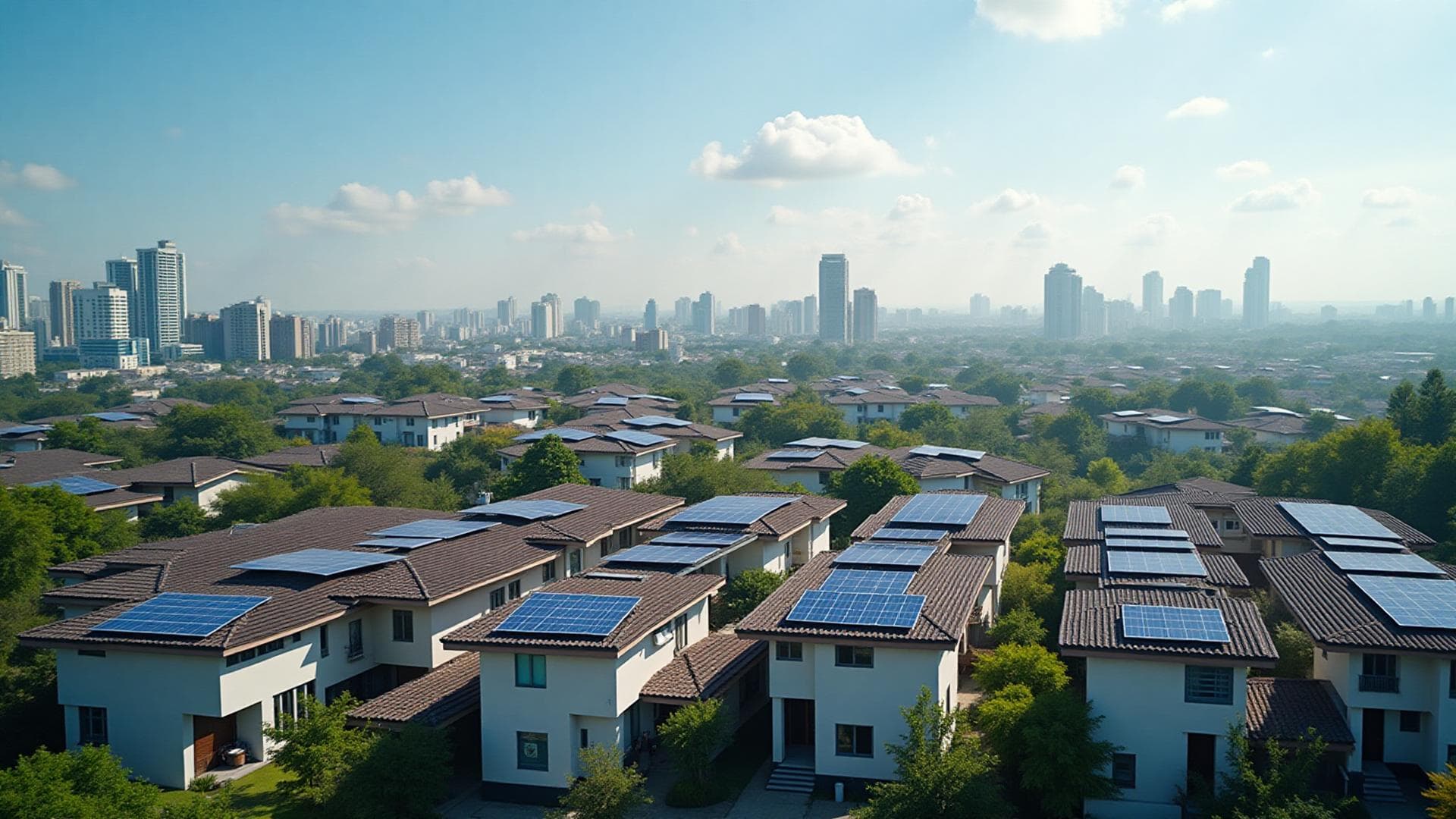
Your solar panels are running at full blast on a sunny Tuesday. By noon, your household has drawn maybe 8 kWh — but your system has already produced 15. That surplus 7 kWh? Without net metering, it evaporates. With net metering, Meralco credits every kWh you export back to the grid, slashing your singil sa ilaw by 60–90%.
- Solar surplus flows to the Meralco grid → you get bill credits at the retail electricity rate
- Legal basis: ERC Resolution No. 09, Series of 2013 — all distribution utilities must accept applications
- Eligible system size in 2026: 1kW up to 100kW
- Application to go-live typically takes 30–45 business days
- A 5kW system can realistically cut your monthly bill by PHP 2,000–3,000
Ano ang Net Metering? (And Why Your Singil sa Ilaw Could Drop to Zero)
Net metering is a billing arrangement where your distribution utility — Meralco, VECO, or any local DU — measures the gap between the electricity you pull from the grid and what your solar panels push back into it. Surplus generation flows to the grid. Meralco credits you at the prevailing Retail Electricity Rate. Your bill drops — or disappears.
The legal foundation is ERC Resolution No. 09, Series of 2013, which compels every distribution utility in the Philippines to accept net metering applications. That resolution has always capped eligible systems at 100kW — a ceiling that, as of 2026, still comfortably covers virtually every residential and small commercial install. Average Filipino households pay PHP 1,200–2,500 per month in kuryente. A well-sized solar system under net metering can cut that by 60–90%.
Paano Mag-Apply: The Exact Steps (2026 Updated Process)
The process is more straightforward than installers make it sound. Do the steps in order. Have every document ready before you submit — one missing requirement resets your 30–45 day clock from scratch.
-
1Install a DOE-accredited solar system — minimum 1kW, maximum 100kW for residential. Accreditation is non-negotiable; non-accredited systems are disqualified before the application even reaches Meralco's desk.
-
2Use a DOE-accredited installer — your contractor must hold accreditation, and the system must pass a technical inspection from Meralco or your local DU before the application moves forward.
-
3Submit the Net Metering Application to Meralco — or VECO for the Visayas, BLCI, or your provincial cooperative. Required documents: proof of ownership or lease, electrical permit, single-line diagram, and inverter technical specifications.
-
4Pay for bi-directional meter installation — approximately PHP 5,000–8,000, shouldered by the applicant. This replaces your existing meter and tracks both import and export on a single unit.
-
5Meralco inspects and approves — allow 30–45 business days from complete document submission. Dense Metro Manila barangays routinely run closer to 45 days due to meter installation backlogs.
-
6Start exporting — credits appear on your next billing cycle. Every kWh you push to the grid offsets your bill automatically. No monthly action required.
Magkano ang Kikitain Mo? Net Metering Credits Explained
Meralco credits your exported electricity at the prevailing Retail Electricity Rate — approximately PHP 10–11 per kWh for residential accounts in 2026. Credits roll forward month to month. Under current ERC rules, surplus is not paid out as cash — credit only, applied to future bills.
"Credits roll forward, not out. Size your system to offset your consumption — not to generate a refund you'll never receive."
A homeowner in Quezon City with a 5kW solar system generates roughly 600 kWh per month. The household consumes 350 kWh and exports the remaining 250 kWh to the grid.
| Item | Value |
|---|---|
| Monthly solar generation (5kW system) | 600 kWh |
| Household consumption | 350 kWh |
| Exported to grid | 250 kWh |
| Net metering credit (at ~PHP 10.50/kWh) | ~PHP 2,625/month |
Sulit Ba? Bottom Line for Filipino Homeowners
A typical 5kW residential solar system runs PHP 200,000–280,000 fully installed in the Philippines. Without net metering, payback stretches to 8–10 years. With it, that window collapses to 5–7 years — and your kuryente bill during that period can run near zero.
The math doesn't lie. Monthly Meralco bill above PHP 3,000? Net metering makes solar a financial decision, not just an environmental one. Below PHP 1,500 per month, the numbers thin out fast.
Mga Tanong (FAQ)
Magkano ang bayad para mag-apply ng net metering sa Meralco?
The bi-directional meter installation runs approximately PHP 5,000–8,000, paid by the applicant. The Meralco application itself carries no separate filing fee.
How long does Meralco net metering approval take in 2026?
Expect 30–45 business days from complete document submission to go-live. Dense Metro Manila areas skew toward 45 days due to meter scheduling backlogs.
Puwede bang mag-net metering kung may VECO or provincial DU ako, hindi Meralco?
Yes — net metering is a national ERC mandate. VECO, BLCI, and provincial cooperatives are all legally required to accept applications for eligible systems up to 100kW. Pull forms directly from your specific DU's website.
Are net metering credits paid out as cash?
Not monthly. Credits offset your bill and roll forward each cycle. Design your system to match your consumption — not to produce a surplus that may never convert to cash.
Net metering is one of the strongest financial incentives for going solar in the Philippines right now. The ERC framework is solid. Meralco's process is established. A correctly sized system turns your rooftop into a permanent hedge against every future kuryente rate increase.
Ready to go solar and skip the net metering paperwork maze?
LakaSolar installers are DOE-accredited — a hard requirement for net metering eligibility — and we handle the full Meralco application process end-to-end.
Get a Free Solar Quote →Quick Savings Estimate
Get a Free Quote
Custom system design