
You've already gotten a quote. You're done paying Meralco like it's rent. What you actually need to know now: what happens between signing a contract and the day your meter runs backwards? Solar panel installation in the Philippines is fast once the crew shows up. It's everything before and after that takes time. Here's the full picture — no surprises.
- Survey to switch-on takes 4–8 weeks — actual roofwork is just 1–2 days
- Labor runs PHP 25,000–150,000+ depending on system size; total installed cost for a home starts around PHP 150,000
- Two permits required: LGU electrical permit + ERC net-metering application
- Your installer must be DOE-accredited — verify before you sign anything
- Get a free solar quote to see what size system fits your actual Meralco bill
Paano Ang Proseso? The Full Installation Timeline
Six stages. Miss one and you're either waiting longer or dealing with a rejected permit. Here's exactly what a proper installation looks like — from first site visit to the moment bago pa mabago ang inyong singil sa ilaw.
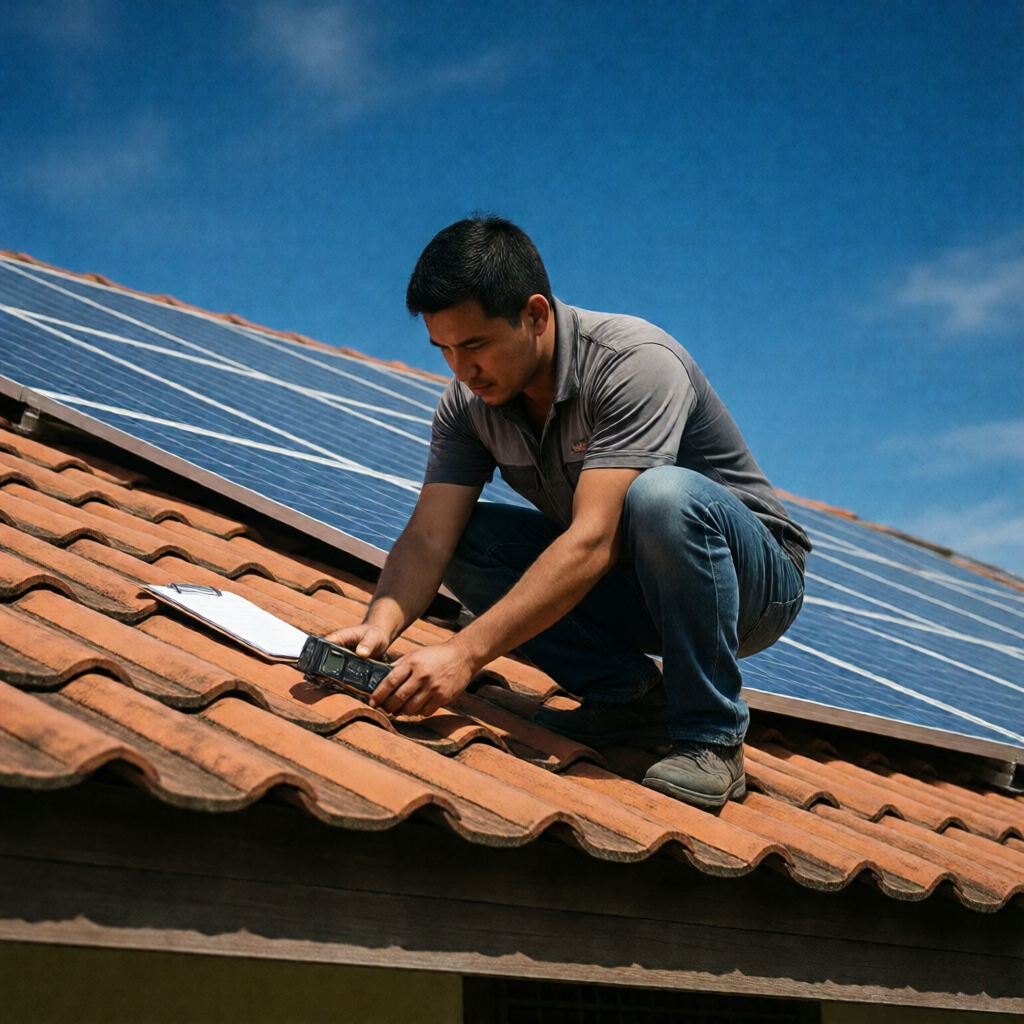
A certified engineer visits to assess roof orientation, tilt, shading from trees or nearby structures, and available area. This determines realistic generation potential — hindi puwedeng hula-hula lang.
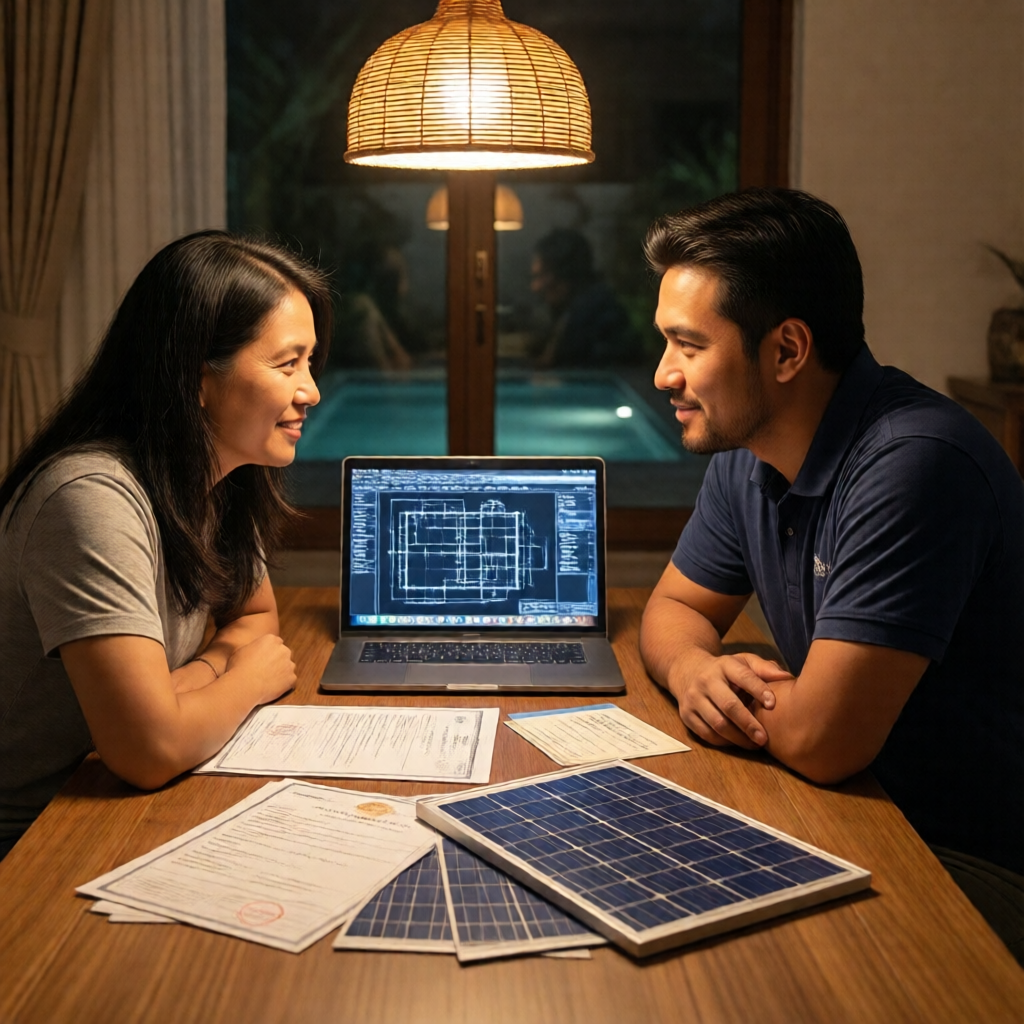
Using survey data plus 12 months of your Meralco or VECO bill history, the installer sizes the system to your actual load. You receive a written proposal — panel brand, inverter specs, projected monthly savings — before committing a single peso.
This is where the calendar bleeds. Your installer files an LGU electrical permit with your local government and submits an ERC net-metering application so you can sell excess kuryente back to the grid. Expect 2–6 weeks here, depending on your area. Good installers track this proactively — ask how often they follow up.
The crew arrives. Racking goes up, panels are mounted, conduit is run, inverter is connected. A licensed electrical engineer must be on-site — not just a technician. For most homes (3–10 kWp), this is a single day's work.
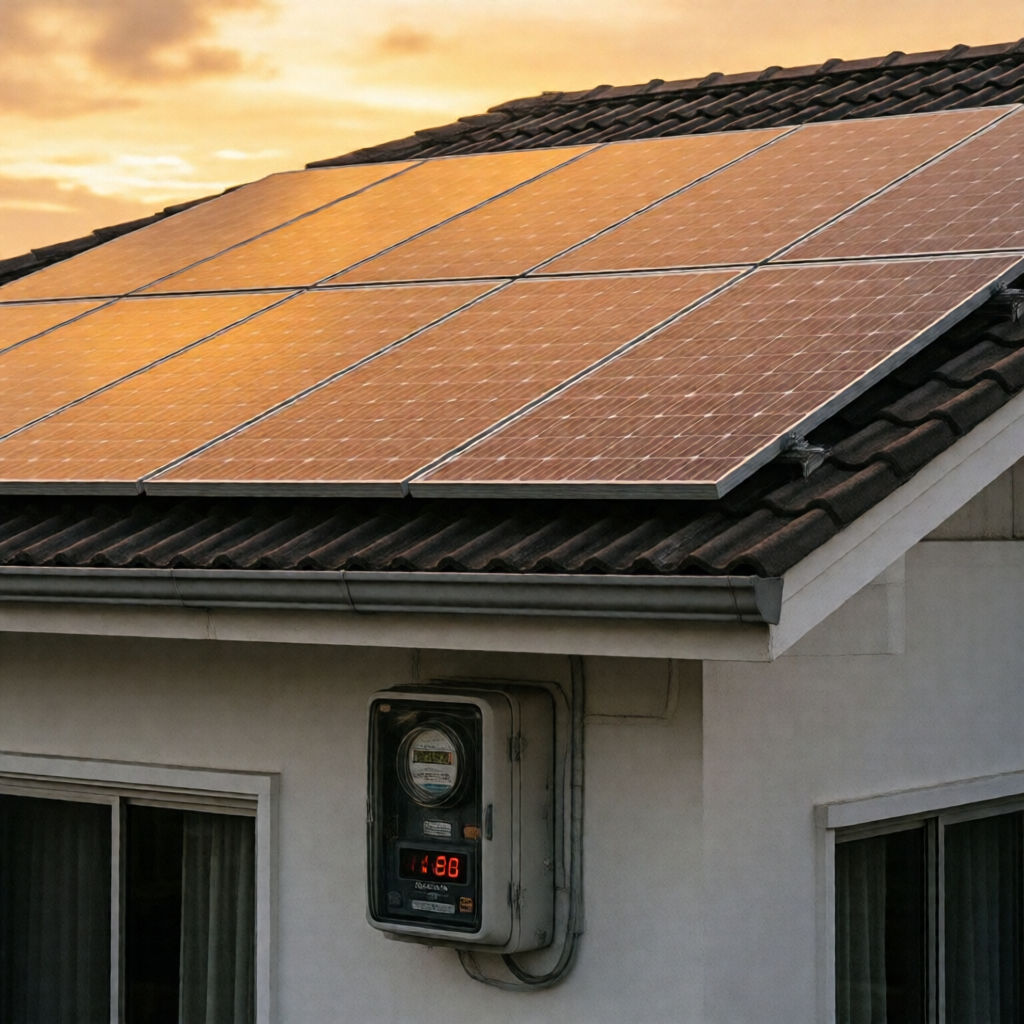
Your utility schedules an inspection of the completed installation, then swaps your existing meter for a bidirectional unit that tracks both power drawn from and exported to the grid.
Meter swapped. Inspection passed. You're live. Bago pa mabago ang inyong singil sa ilaw, your system is already generating — and savings start with the first billing cycle.
Magkano? Labor & Total Installation Cost Breakdown
Labor is only part of the bill. Panels, inverter, wiring, and racking make up the bulk. That said: don't slash the labor budget to save money. A poorly mounted system on a Batangas or Cebu rooftop during typhoon season is no bargain — at any price.
| System Size | Est. Labor Cost (PHP) | Total Installed Cost (PHP) | Typical Meralco Bill Before | Expected Monthly Savings |
|---|---|---|---|---|
| Small Home (3–5 kWp) | PHP 25,000–40,000 | PHP 150,000–250,000 | PHP 3,000–6,000/mo | PHP 2,000–4,500/mo |
| Mid Home (6–10 kWp) | PHP 40,000–70,000 | PHP 280,000–450,000 | PHP 7,000–12,000/mo | PHP 5,000–9,000/mo |
| Commercial (10–30 kWp) | PHP 70,000–150,000+ | PHP 500,000–1,200,000+ | PHP 15,000–50,000/mo | PHP 10,000–35,000/mo |
Costs vary by region — Luzon vs. Visayas vs. Mindanao pricing differs due to logistics and labor rates. These are industry ballpark ranges, not guaranteed quotes.
Labor is usually 15–20% of total project cost — don't sacrifice quality here to save a few pesos. A sloppy install voids warranties and creates safety hazards. For a deeper look at panel-only pricing, see Magkano ang solar panel sa Philippines 2026?
Sulit Ba Ang Installer Mo? What to Check Before You Sign
This is where most homeowners go wrong. They pick the cheapest quote without checking credentials, then wonder why their ERC application got rejected — or why the roof is leaking six months later. Run this list before you hand over a deposit.
- ✓DOE-Accredited Solar Installer — Verify on the Department of Energy website. Accreditation means minimum standards for equipment, personnel, and installation practices are met. Non-accredited installers cannot legally file ERC net-metering applications. Full stop.
- ✓Licensed Electrical Engineer On-Site — Not just a technician. A PRC-licensed electrical engineer must supervise and sign off on all electrical work. Ask for the license number. Write it down.
- ✓They Handle ERC Paperwork — Hindi mo kailangang gawin ito yourself. A legitimate installer manages the entire net-metering application on your behalf, from initial filing to follow-up with your distribution utility. If they expect you to chase the ERC, that's a red flag.
- ✓Clear Warranty Terms in Writing — Panels: 25-year performance warranty minimum. Inverter: 5–10 years (confirm brand service centers exist in the Philippines). Workmanship: at least 1–2 years. If it's not in the contract, it doesn't exist.
- ✓Real After-Sales Support — Sino tatawagan mo kung may problema? Ask for a local service contact — not a Manila hotline that rings out. Check Google and Facebook reviews specifically for post-install service, not just sales experience. The two are often very different.
"The cheapest quote is often the one that costs the most — through rejected permits, warranty disputes, or a roof mount that doesn't survive the next typhoon season."
ERC net-metering approval lets you sell excess kuryente back to Meralco or VECO — but only DOE-accredited installers can file the application on your behalf. Choose a non-accredited contractor and you can still go solar, but you forfeit the ability to export power back to the grid entirely.
Ready to move forward? Find a certified LakaSolar installer near you or explore our residential solar packages to see what system size fits your home.
Solar installation in the Philippines is mature, well-established, and predictable — if you pick the right contractor. The physical work takes 1–2 days. The timeline from survey to switch-on is 4–8 weeks, driven entirely by permit and utility scheduling. Choose a DOE-accredited installer with a licensed engineer on-site, confirm they handle your ERC paperwork, and get every warranty term in writing. Do those three things, and your Meralco bill will look very different within the first billing cycle.
Frequently Asked Questions
Gaano katagal ang solar installation sa Philippines from survey to switch-on?
Expect 4–8 weeks total. The rooftop installation itself takes just 1–2 days, but ERC net-metering approval and the Meralco or VECO bidirectional meter swap can take 3–6 weeks depending on your area and the utility's current scheduling load.
Do I need permits for solar panel installation in the Philippines?
Yes — two of them. An LGU electrical permit from your local government, and an ERC net-metering application if you want to export excess power back to the grid. A DOE-accredited installer handles both. Confirm this is included in their scope of work before signing any contract.
Magkano ang labor cost ng solar installation para sa bahay?
For a typical 3–5 kWp home system, labor runs roughly PHP 25,000–40,000 — separate from panels and inverter. Total installed cost for that size ranges from around PHP 150,000 to PHP 250,000 depending on brand, configuration, and location. Get a free quote for an accurate figure based on your actual roof and consumption.
What happens after solar installation — will my Meralco bill go to zero?
Not quite zero for most households. You'll still pay the monthly service charge (around PHP 40–60) plus any consumption during nighttime hours not covered by battery storage. A well-sized grid-tied system typically cuts the electricity portion of your bill by 60–90%. Homeowners with a 5 kWp system and daytime-heavy usage often see bills drop from PHP 8,000–12,000 to under PHP 1,500 per month.
Before you go solar, make sure your financial documents are in order — lenders and installer financing programs require proof of income. Generate a professional pay stub in minutes to support your solar loan or HDMF application.
Create Your Pay Stub Now — FreeQuick Savings Estimate
Get a Free Quote
Custom system design