Somewhere in a barangay in Samar, a family runs a generator from 6 PM to 10 PM — every night, for years. Gasolina every week. Noise. Fumes. Four hours of light. That is the daily reality for hundreds of thousands of households in SPUG-covered areas and off-grid islands across the Philippines. For them, an off-grid solar system isn't a lifestyle statement. It's the only kuryente solution that actually works.
"Off-grid solar" gets marketed relentlessly at Metro Manila homeowners who'd be far better served by a grid-tied setup. So before the cost breakdown: who is this actually for?
- Off-grid solar makes sense when the grid can't reach you — or can't be trusted.
- A 3kW system starts at around PHP 180,000–250,000 installed; 5kW runs PHP 280,000–380,000.
- Batteries are the biggest cost driver — typically 40–50% of your total budget.
- Size for 1.5–2 days of autonomy, not just 24 hours — rainy season matters.
- Professional load assessment before buying is non-negotiable at this price point.
Sino ang Kailangan ng Off-Grid Solar? (And Who Doesn't)
Off-grid and grid-tied solar are two products solving two entirely different problems. Grid-tied trims your Meralco or VECO bill. Off-grid replaces the grid entirely — and that gap in scope drives a massive gap in cost.
Three situations make off-grid the right call. First: no grid access at all — island barangays, remote farms in Mindanao, upland communities in the Cordillera. Second: a grid so unstable it's functionally useless — 8–12-hour brownouts daily, voltage spikes killing appliances, cooperative service that exists on paper only. Third: deliberate energy independence — a small group, and only financially justified in very specific scenarios.
Stable Meralco connection in a major city? Stop here. A hybrid or grid-tied system delivers far better value at a fraction of the cost. Off-grid is for where the grid fails you — not for escaping a PHP 3,000 monthly bill you could offset more cheaply another way.
Ano ang Kasama sa System? Components + PHP Cost by Size
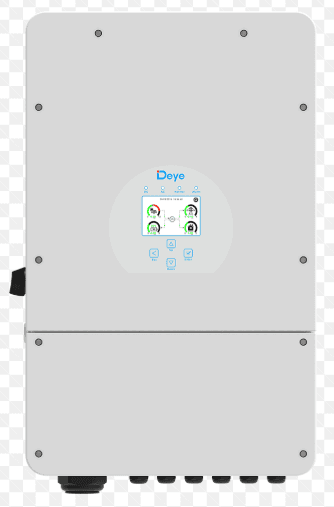
Every off-grid system requires four core components: solar panels, an MPPT charge controller, a battery bank, and an off-grid inverter. Miss one and the system doesn't function. The battery bank is where most of your budget lands.
In Philippine conditions — relentless heat, high humidity, typhoon season — LiFePO4 (lithium iron phosphate) batteries outperform lead-acid on every metric that matters: longer cycle life, better performance above 35°C, safer chemistry. Higher upfront cost, lower 10-year cost. Lead-acid still works on very tight budgets, but factor in earlier replacement when running the numbers.
| System Size | Installed Cost (PHP) | Powers |
|---|---|---|
| 3kW Off-Grid | PHP 180,000 – 250,000 | Small nipa or concrete home — lights, fans, ref, basic TV |
| 5kW Off-Grid | PHP 280,000 – 380,000 | Medium family home — ref, multiple fans, lights, aircon (limited hours) |
| 10kW Off-Grid | PHP 500,000 – 700,000 | Large home or small agri-business — pumps, multiple ACs, workshop tools |
These are installed price ranges for quality equipment — panels, MPPT controller, LiFePO4 batteries, and off-grid inverter. Exchange rates and battery supply shift prices; treat these as planning benchmarks, not quotes.
Paano Kalkulahin ang Battery Storage Mo? (24-Hour Autonomy Guide)
This is where most buyers go wrong. They size the panels generously and underbuy on batteries — then wonder why the power cuts at 2 AM. Here's a real Filipino household load calculation, step by step.
"Get the battery calculation wrong and even a PHP 300,000 system will leave you in the dark. Sizing is everything."
-
1
List your appliances and daily usage. Example: Refrigerator (150W × 24hr = 3,600Wh), 3 LED bulbs (15W × 8hr = 360Wh), electric fan (60W × 12hr = 720Wh), TV (80W × 6hr = 480Wh). Total: 5,160Wh per day.
-
2
Add a 20% buffer for inverter losses and system inefficiency. 5,160Wh × 1.2 = 6,192Wh needed.
-
3
Factor in autonomy days. For 1.5 days of storage — the recommended minimum for Philippine rainy season: 6,192Wh × 1.5 = ~9.3kWh usable battery capacity.
-
4
Account for depth of discharge. LiFePO4 batteries allow ~80% DoD, so actual installed capacity required: 9.3kWh ÷ 0.8 = ~11.6kWh total.
Consider a rice farmer in Iloilo who budgeted for a 5kW off-grid system but priced batteries for 24-hour coverage only. Typhoon season hit. Two overcast days back-to-back. The system shut down mid-afternoon, every day. Retrofitting battery capacity post-installation costs far more per kilowatt-hour than sizing correctly from day one.
Most off-grid systems in the Philippines are sized for 1.5–2 days of autonomy, not 24 hours. Rainy season in Luzon can deliver 3–5 consecutive overcast days — cloud cover cuts solar generation even when it isn't raining. SPUG-area installers routinely recommend the higher end of that range.
LakaSolar Off-Grid Services — Get a Free Assessment
Off-grid is a fundamentally different purchase than grid-tied — higher investment, more complex sizing, and zero tolerance for undersizing because there is no grid to fall back on. LakaSolar has installed off-grid systems across Luzon, Visayas, and Mindanao, including SPUG-covered areas and island properties where logistics alone demand careful planning.
A load assessment before you buy isn't optional at this price point. It's how you avoid a PHP 50,000 battery mistake six months later.
Ready to go off-grid? Let's size it right the first time.
Get My Free Off-Grid AssessmentOff-grid solar in the Philippines is the right call for areas without reliable grid access — and a serious financial commitment that demands proper sizing. Battery storage is your biggest cost and your biggest risk if undersized. A 5kW system runs PHP 280,000–380,000 installed; size for 1.5 days of autonomy minimum. Get a professional load audit before you sign anything.
Mga Madalas Itanong (FAQ)
Magkano ang off-grid solar system sa Pilipinas?
A basic 3kW off-grid system costs PHP 180,000–250,000 installed. A 5kW runs PHP 280,000–380,000, and a 10kW setup starts at around PHP 500,000. Battery storage drives the price — typically 40–50% of total system cost, which is why off-grid setups cost significantly more than equivalent grid-tied systems.
Can I go off-grid if I'm already connected to Meralco or VECO?
Technically yes — but rarely the smartest move. With a stable grid connection, a grid-tied or hybrid solar system delivers far better value. Use solar during the day, export excess under net metering, fall back on the grid at night — no massive battery bank required. Off-grid makes sense when grid power is genuinely unavailable or deeply unreliable.
How many batteries do I need for a typical Filipino household?
Based on average loads — ref, fans, lights, TV — most Filipino families need roughly 9–12kWh of total installed battery capacity to cover 1.5 days of autonomy. In usable terms, that's about 7–9kWh of actual energy. LakaSolar's free assessment includes a full load audit so you don't overbuy or underbuy.
For households that genuinely cannot rely on the grid, off-grid solar earns its cost. Size it right, use quality batteries, and you won't see a singil sa ilaw for 15–20 years.
LakaSolar offers a free load audit and system sizing consultation — no commitment, no pressure. Get an honest assessment of whether off-grid is right for your location and budget, with a detailed breakdown of system cost and payback period.
Get Your Free Solar Assessment →Quick Savings Estimate
Get a Free Quote
Custom system design