
Your Meralco bill hits PHP 8,000 again. You stare at it. Your neighbor just had solar panels installed and says his singil sa ilaw dropped by more than half. You want in — but paano ba talaga gumagana ang solar? That question is exactly what this page answers, and understanding how solar works in the Philippines is simpler than any installer wants you to think.
Sunlight hits your panels. Your house gets free electricity. Anything you don't use gets sold back to the grid. That's the whole story. The details — which system type, what net metering actually pays you, whether it's worth it — are below, in plain Filipino-homeowner terms.
- Solar converts sunlight to electricity — no moving parts, no fuel, just sun.
- Three system types: on-grid, off-grid, and hybrid — most Metro Manila homes go on-grid.
- Net metering lets you earn credits from excess electricity you send back to Meralco/VECO.
- Most Philippine home systems pay for themselves in roughly 4–6 years.
Paano Gumagana ang Solar? The Simple Version
Your solar panels are a harvest machine. Each panel is packed with photovoltaic (PV) cells that absorb photons from the sun and release electrons — generating direct current (DC) electricity. That DC power feeds into an inverter, which flips it into the alternating current (AC) your appliances actually run on. Done. No combustion, no moving parts, no fuel bill.
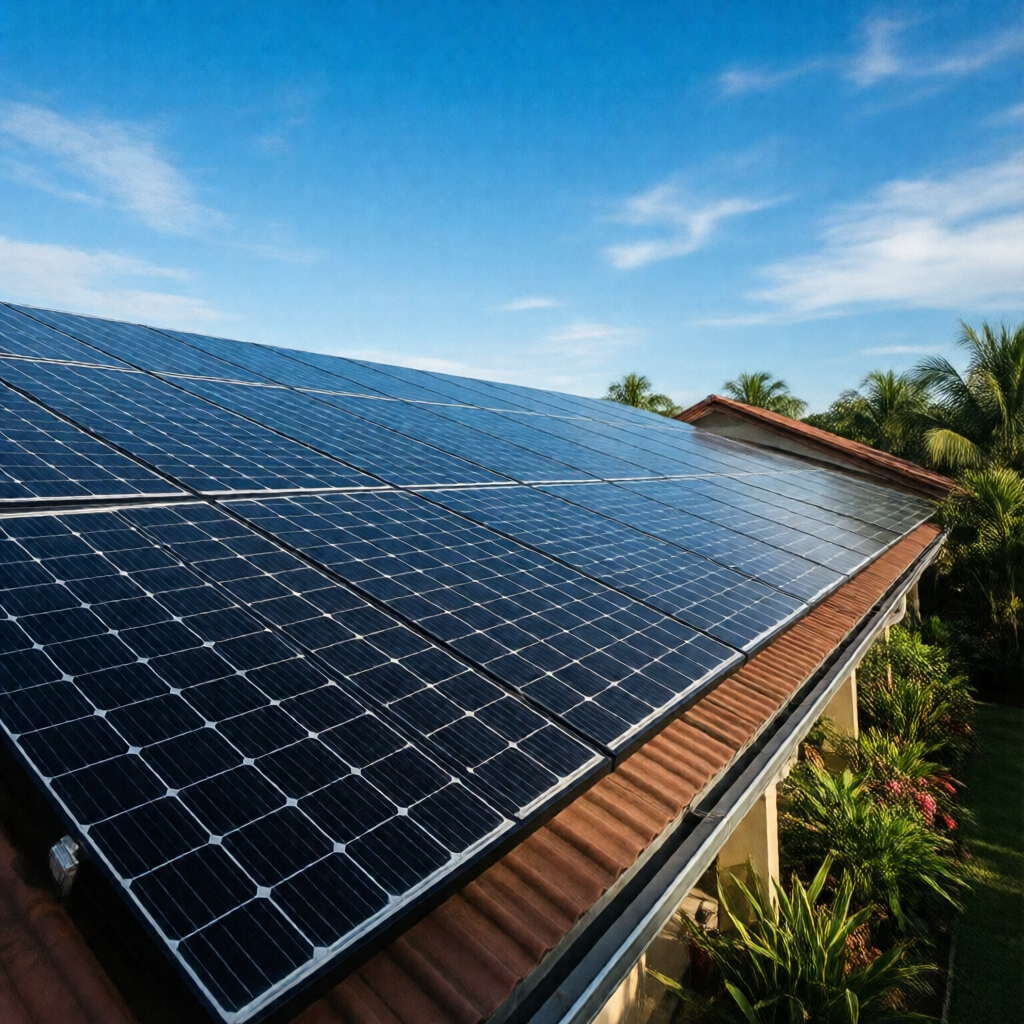
The Philippines sits in a solar sweet spot. PAGASA data puts the country at 5–6 peak sun hours daily — well above the global average and among the strongest readings in all of Asia. More sun hours equal more free electricity per panel, every single day.
- Solar Panels — capture sunlight and generate DC electricity
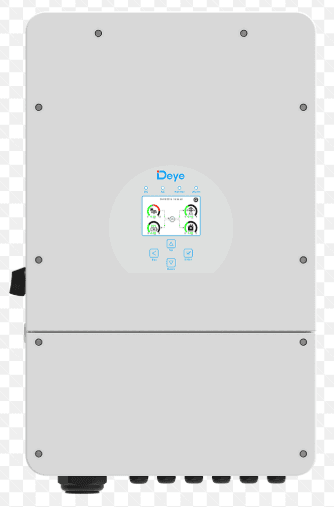
- Inverter — converts DC to usable AC power for your home
- Battery — stores excess energy (optional, but essential for brownout protection)
No battery? Totally fine for most setups. Batteries add cost, and they're only critical if you need power during outages or live somewhere with unreliable grid supply. For urban homeowners with stable Meralco service, skip the battery and pocket the savings.
On-Grid, Off-Grid, o Hybrid? Alin ang Para Sa'yo?
One question cuts through the confusion: do you need the grid, or not? Your answer determines your system.
| System Type | How It Works | Best For | Rough Cost (PHP) |
|---|---|---|---|
| On-Grid | Connected to Meralco/VECO; earns net metering credits; no batteries needed | Metro Manila, urban homes with stable grid | ~PHP 150K–300K |
| Off-Grid | Fully independent from the grid; runs on solar + battery storage | Probinsya, remote areas, farms, islands | ~PHP 300K–700K+ |
| Hybrid | On-grid + battery backup; best of both worlds | Homes that want bill savings AND brownout protection | ~PHP 250K–600K |
For most homeowners in Metro Manila, Cebu, and other cities with reliable Meralco or VECO supply — on-grid is the sulit choice. Lower upfront cost, fastest payback, and you still earn from net metering. Hybrid is gaining fast, though. After those multi-day summer brownouts, the extra investment starts looking very reasonable.
Net Metering: Pati Kuryente Mo, Kumikita
Net metering is what makes on-grid solar genuinely exciting in the Philippines. When your panels produce more electricity than you're using at that moment, the surplus flows back into the Meralco or VECO grid — and they credit that energy directly against your next bill.
"Your Meralco meter runs backwards. The electricity you generate but don't use becomes a peso credit on your next singil sa ilaw."
The Energy Regulatory Commission (ERC) allows residential net metering for systems up to 100kW — far beyond anything a home requires. Most Filipino homeowners with a 3–5kW system slash their monthly bill by 50% to over 90%, depending on usage and roof exposure.
Take Rey, a homeowner in Parañaque — his Meralco bill was running PHP 9,500 a month. After a 4kW on-grid system, it dropped to roughly PHP 1,200. His system cost PHP 220,000 installed. At that savings rate, he breaks even in under three years. That's not a sales pitch; that's arithmetic.
Solar Ba 'Yan? The Real Verdict for Filipino Homes
Real talk: the upfront cost is significant. A basic residential system starts around PHP 120,000 for a small setup, climbing past PHP 300,000 for a full 5kW on-grid install. Not small money.

But the Philippines makes an unusually strong case for solar. Electricity rates here rank among the highest in Southeast Asia. The sun shines hard and long, almost year-round. And the government is actually on your side: solar equipment carries a VAT exemption under the Renewable Energy Act (RA 9513), and net metering is backed by law — not just corporate policy.
Beyond the bills, solar panels add measurable property value. They also hedge against Meralco rate hikes, which — if you've been paying attention — only go one direction.
Under the Renewable Energy Act, solar panels and inverters purchased for residential or commercial use are VAT-exempt — which alone shaves 12% off your equipment cost before you've generated a single watt.
For most Filipino homeowners with a Meralco or VECO connection and a PHP 5,000+ monthly bill, on-grid solar is a genuinely sulit investment. Lower bills from day one. Net metering credits. Government tax incentives. A payback period of roughly 4–6 years. The main barrier is the upfront cost — but financing options are expanding fast. Brownout-prone area? A hybrid system is worth every extra peso.
Hindi mo kailangang mag-alinlangan.
See exactly how much you can save based on your actual Meralco bill and location — no commitment needed.
Mga Madalas na Tanong (FAQ)
Magkano ang isang solar panel system sa Pilipinas?
A basic residential solar system (3–5kW) starts at around PHP 120,000–300,000 fully installed. Hybrid systems with battery backup run from roughly PHP 250,000–600,000 or more, depending on battery capacity and brand. Prices vary by system size, your location, and the installer you choose.
Does solar work during brownouts or when it rains?
Standard on-grid solar systems automatically shut off during brownouts — a safety requirement to protect linemen working on the grid. Power during outages requires a hybrid or off-grid system with battery storage. On cloudy or rainy days, panels still generate electricity, just at reduced output — typically 10–25% of normal capacity. Rain is not a dealbreaker.
How do I apply for net metering with Meralco?
Your accredited solar installer handles the net metering application directly with Meralco or your local distribution utility (DU) after installation. The process typically takes 4–8 weeks. You'll need an approved grid-tied inverter, and Meralco will install a bidirectional meter to track both what you consume and what you send back.
Kailangan ba ng permit para mag-install ng solar?
Yes. A building permit is typically required, along with an electrical permit from your local government unit (LGU). Your accredited installer usually handles permitting as part of the installation package — confirm this upfront before signing any contract. Solar systems installed without proper permits can complicate your net metering application and future property transactions.
Bottom Line
Solar is no longer just for the wealthy or the tech-savvy. For most Philippine homeowners paying PHP 3,000 or more monthly to Meralco, a grid-tied solar system pays for itself in 5–8 years — and runs for 25 years.
- On-grid is cheapest; hybrid gives you outage protection
- Net metering turns your roof into a revenue stream
- Get at least 3 quotes from BEE-accredited installers
- Rain and clouds reduce — but never eliminate — your output
Siguruhin ang iyong kita bago mag-invest sa solar.
Track your monthly income clearly with a professional pay stub — so you can show proof of income to any solar financing provider or bank.
Generate Your Pay Stub FreeQuick Savings Estimate
Get a Free Quote
Custom system design