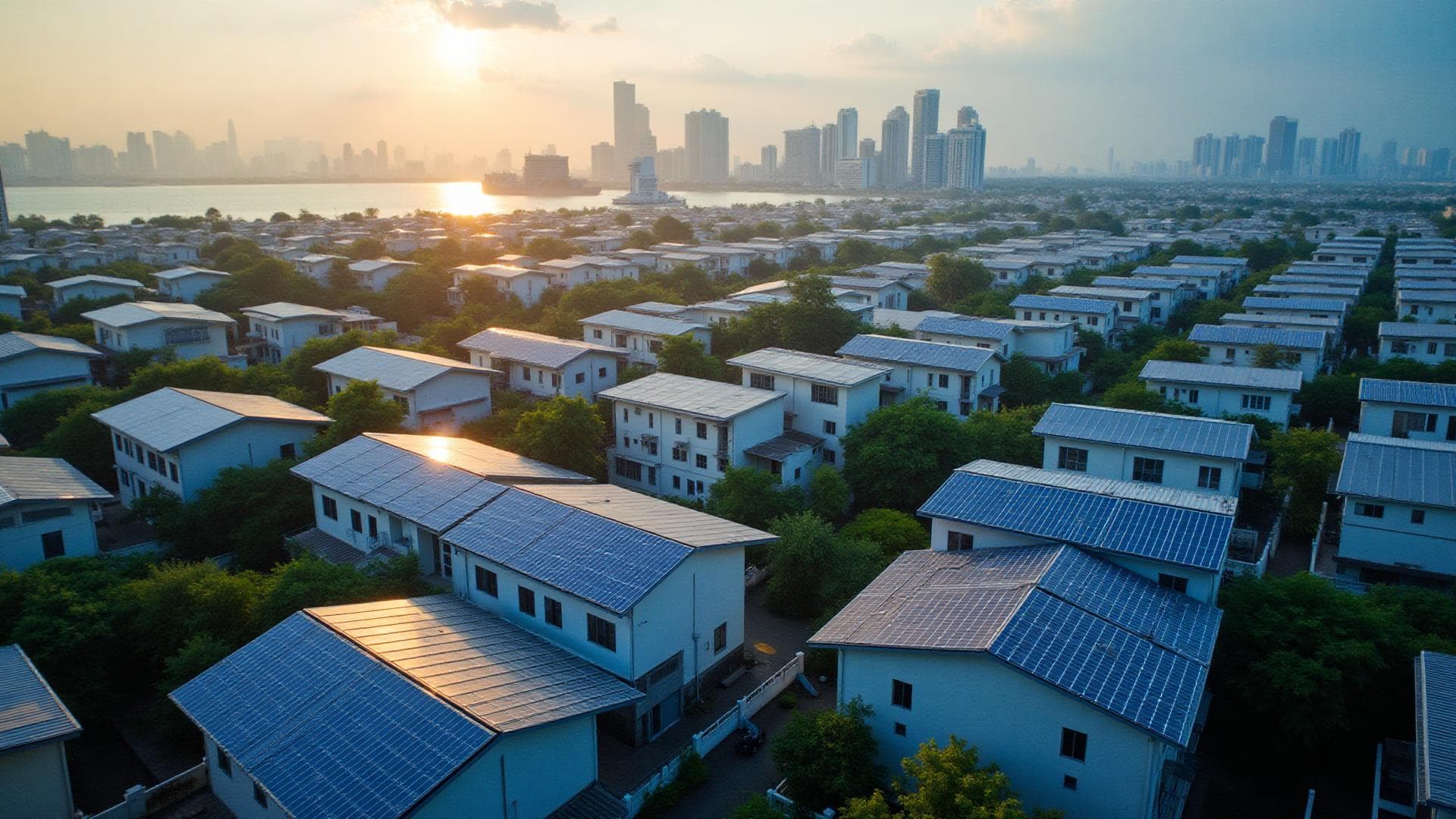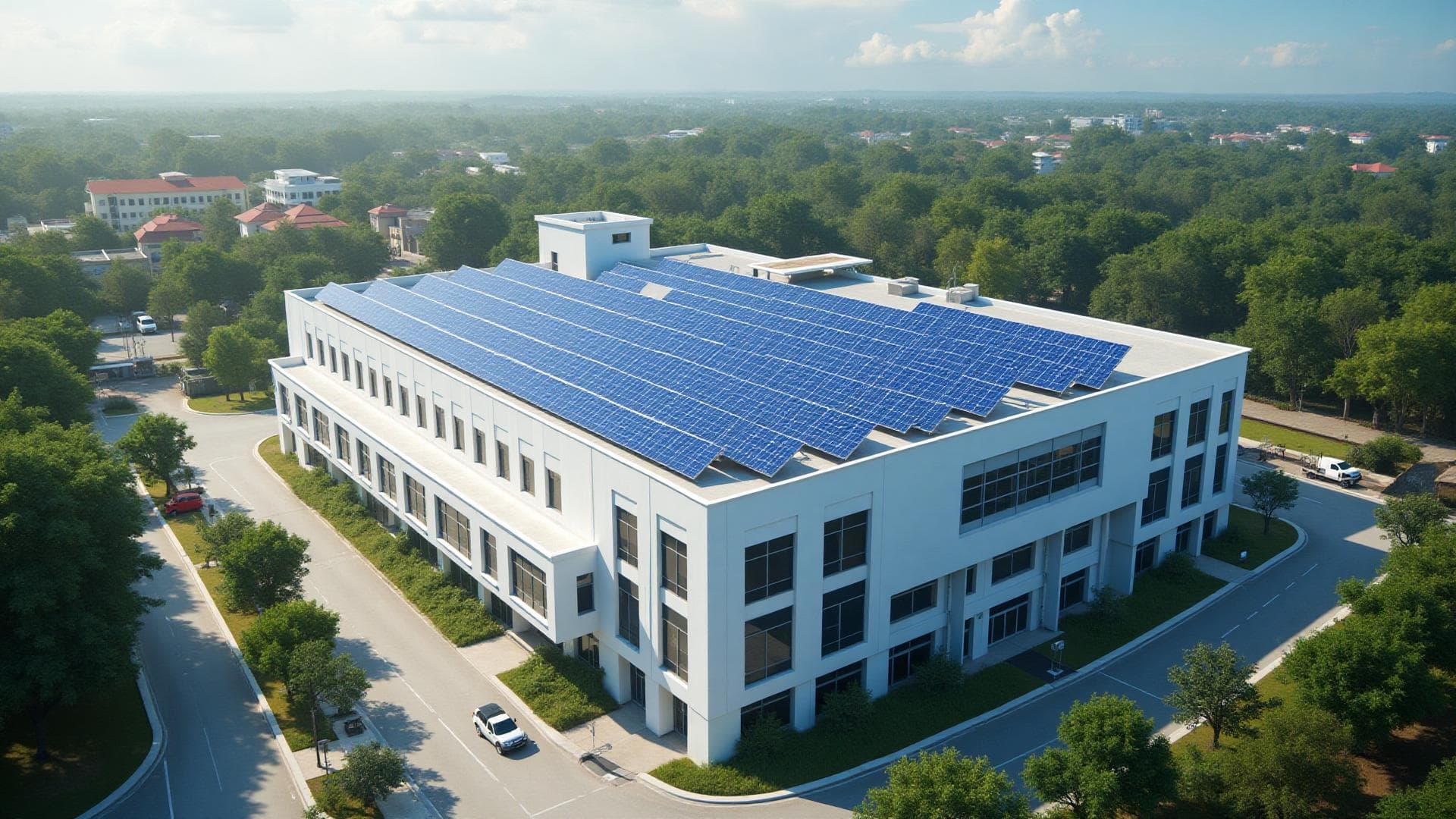

Three aircons. A large ref. Weekend laundry. A Meralco bill that just crossed PHP 12,000. For that household — and there are millions of them across the Philippines — an 8kW solar system Philippines installers call the sweet-spot fix. Not the cheapest option. The correct one.
The 2026 all-in price: PHP 320,000–520,000, depending on whether you go grid-tied or hybrid with a battery. Monthly output: 960–1,100 kWh. Expected savings: PHP 8,000–11,000 off your Meralco bill every single month. The math is straightforward. The payback is faster than most people expect.
- All-in cost: PHP 320,000–520,000 (grid-tied to hybrid with battery)
- Monthly output: ~960–1,100 kWh, enough for most mid-size homes
- Estimated savings: PHP 8,000–11,000/month on your Meralco bill
- Payback: 3–5 years grid-tied; 5–7 years with battery backup
- Start with your latest kWh usage — that number tells you everything
Ano ang 8kW Solar System? (At Para Kanino Ito?)
Sixteen to twenty solar panels — 400W–500W each, mono PERC or TOPCon — wired to an 8kW inverter, mounted on 40–50 sqm of unshaded roof. That's it. The physical footprint of an 8kW system fits a standard two-storey subdivision home the way a 1.5 HP inverter aircon fits a standard bedroom: not undersized, not wasteful, just right.
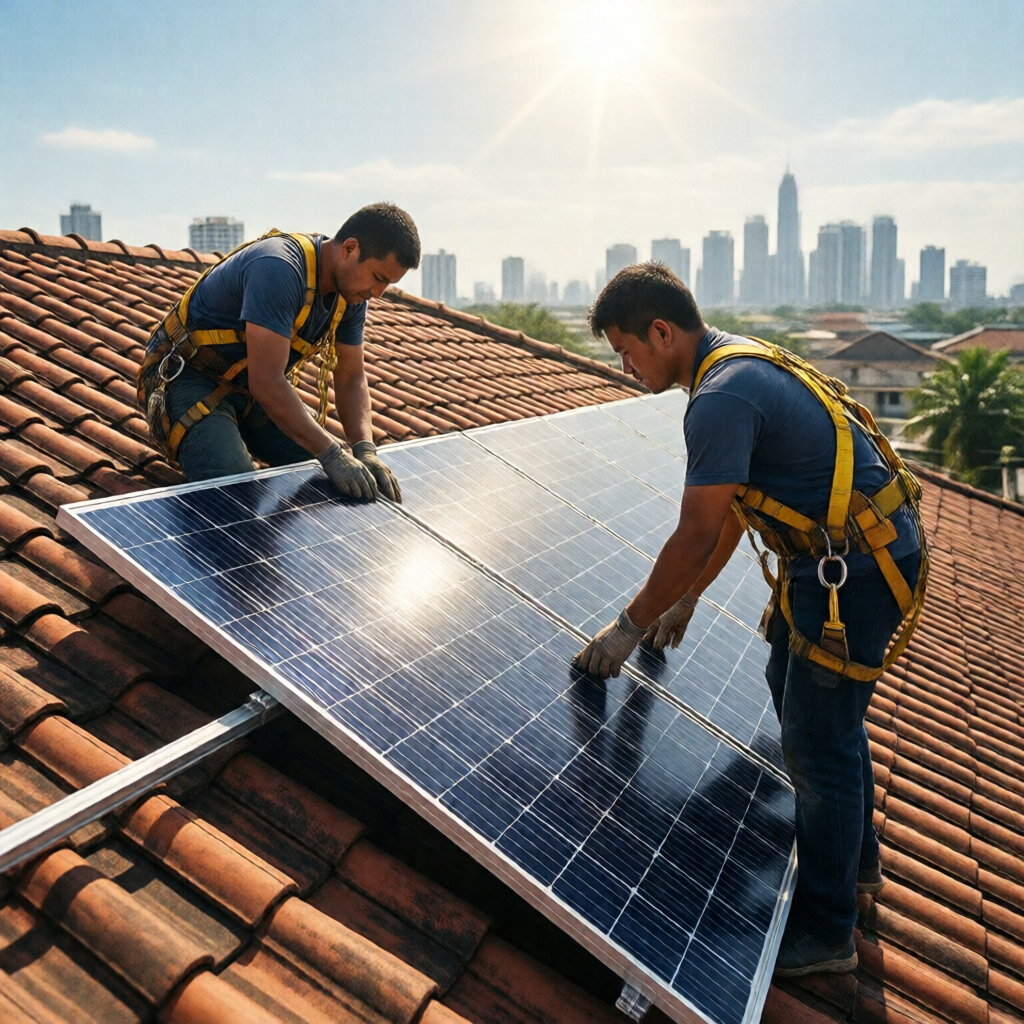
A 3kW system handles a condo or sari-sari store. A 10kW system suits a larger house or SME. The 8kW is built for the family in the middle — two to three aircon units, a large ref, a washing machine, and decent lighting running through the day. Halos kalahati ng singil sa ilaw mo ang mababawasan. Often more in peak summer months.
One early decision: grid-tied (connected to Meralco or VECO, no battery, lower cost, fastest payback) or hybrid (adds a battery pack for brownout coverage). If outages hit your area more than once a week, that hybrid calculation changes considerably. More detail below.
- Panels: 16–20 units (400W–500W mono PERC or TOPCon)
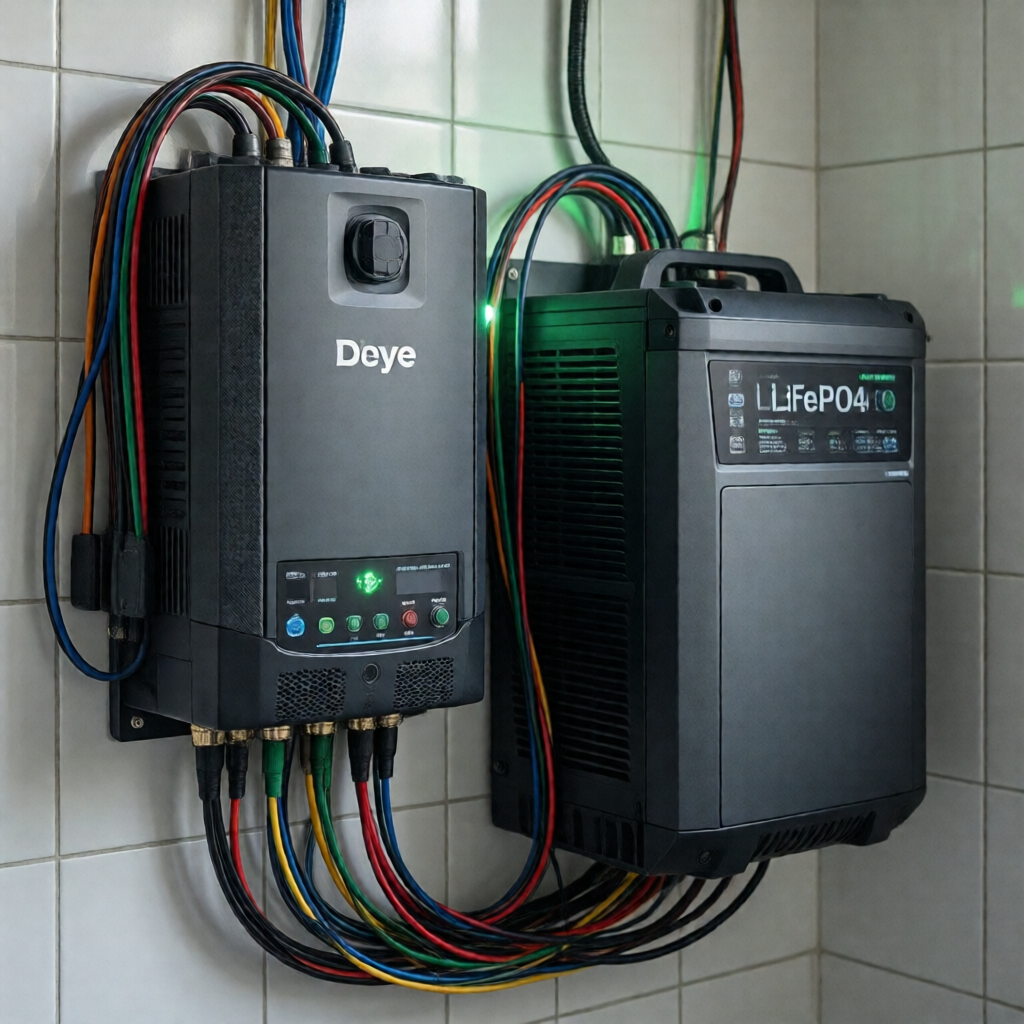
- Inverter: 8kW string or hybrid (Deye, Sungrow, Growatt common in PH)
- Roof space: ~40–50 sqm unshaded
- Best for: homes using 600–900 kWh/month
Magkano? 8kW Solar System Price in the Philippines (2026)
Three variables drive your quote: inverter type, panel tier, and whether you add a battery. Roof type matters too — galvanized iron costs more to mount on than concrete, due to special L-feet and sealing. Here's where the market sits right now:
| Setup Type | Estimated Price Range | What's Included |
|---|---|---|
| Grid-Tied Only | PHP 320,000–380,000 | Panels + string inverter + install + permits |
| Hybrid (Battery-Ready) | PHP 370,000–440,000 | Hybrid inverter (Deye/Sungrow) + panels, no battery yet |
| Hybrid + Battery Backup | PHP 450,000–520,000+ | Full system + 10–15 kWh LiFePO4 battery |
TOPCon panels run roughly 10–15% more than mono PERC. Worth it? In Philippine heat, TOPCon's lower temperature coefficient delivers a small but measurable output advantage across a 25-year lifespan. Tight budget? Mono PERC still returns excellent ROI. Don't let the tier upgrade become a dealbreaker.
Sulit Ba? Monthly Savings at Payback Period
Take a family in Cavite using 800 kWh/month. At Meralco's approximate generation rate of PHP 9–10/kWh, that's PHP 7,200–8,000 in generation charges before distribution and other line items push the total bill higher. Their 8kW grid-tied system, running at the Philippines' average 4.5 peak sun hours per day, generates 960–1,100 kWh monthly. Good months, solar covers everything — surplus flows back to Meralco through net metering. Conservative estimate: PHP 8,000–11,000/month in savings.
"PHP 380,000 ÷ PHP 8,500 average monthly savings = 44 months. Under 4 years to break even. Panels are warrantied for 25."
Grid-tied payback: 3–5 years. Hybrid with battery: 5–7 years. The battery adds cost, but it also buys brownout protection — a real-money benefit in the Visayas, Mindanao, and rural areas where outages are routine rather than rare.
Sa loob ng 5 taon, usually na-recover na ang puhunan — tapos libre na ang kuryente for 20+ years. For a family spending PHP 10,000+/month on electricity, that math is hard to argue with.
Under the Philippine Net Metering Program (ERC Resolution No. 1, Series of 2013, as amended), residential solar users can sell excess electricity back to the grid — your Meralco meter literally runs backwards. The minimum qualifying system size is 1kW. An 8kW install clears that threshold easily.
Paano Mag-Start? Three Steps to Your 8kW System

-
1
Pull your latest Meralco or VECO bill. Find the kWh consumed this month. Between 600–900 kWh, and an 8kW system is sized for you. Under 400 kWh? A 3kW system likely makes more financial sense.
-
2
Get a free site assessment. A good installer checks roof orientation, shading from trees and neighboring structures, structural load, and your actual solar potential before quoting. Don't skip it. Shading on a single panel can cut total system output by 10–20%.
-
3
Choose: hybrid or grid-tied? Brownouts more than once a week in your area? A battery is likely worth the premium. Stable Metro Manila grid and focused on cutting the bill fast? Grid-tied wins on payback speed. And with a hybrid inverter, you can always bolt on a battery later.
Running a bigger property or small business? Our 10kW solar system guide covers the next tier up — commercial-grade pricing, business ROI, and inverter options for heavier loads.
Ready to find out exactly how much an 8kW system will save your household?
Get a Free 8kW QuoteMga Madalas na Tanong (FAQ)
Ilan ang panels sa isang 8kW solar system?
Sixteen to 20 panels, depending on individual wattage (400W–500W mono PERC or TOPCon). You need roughly 40–50 sqm of unshaded roof. Most two-storey subdivision homes have well more than that.
Kaya ba ng 8kW system ang buong bahay?
Yes — for homes between 600–900 kWh/month. Aircon, ref, washing machine, and LED lighting running through the day: all covered. Above 1,000 kWh/month, or running a home office with heavy equipment, consider stepping up to a 10kW system.
Puwede bang may battery ang 8kW system?
Yes. A hybrid 8kW setup with a 10–15 kWh battery (Deye and Sungrow are the most common Philippine choices) gives you backup power through brownouts. Budget an extra PHP 80,000–150,000 on top of system cost, depending on battery capacity and brand.
Kasama na ba ang net metering sa 8kW install?
Your installer handles the net metering application to Meralco or VECO — it shouldn't appear as a separate line item. The connection and paperwork typically take 1–3 months post-installation. Once approved, every kilowatt your system pushes to the grid automatically credits your next bill.
Maaasahan ba ang 25-year warranty sa panels?
Tier-1 manufacturers — JA Solar, Jinko, LONGi, Canadian Solar, all sold widely in the Philippines — offer a 25-year linear power output warranty guaranteeing at least 80–82% of rated output by year 25. Inverter warranty is 5–10 years, separately. Always confirm your installer provides local warranty support, not just the manufacturer's international terms.
Meralco rates aren't dropping. The payback math on an 8kW system holds up even at conservative savings estimates. Check your kWh figure, get a site assessment, and run the numbers — most families discover the break-even point arrives sooner than they thought possible.
Bottom Line
An 8kW solar system costs PHP 350,000–550,000 installed in the Philippines in 2026. At current Meralco rates, most households recover that investment in 5–8 years — then enjoy 15–20 more years of near-zero electricity bills.
- Best fit: homes using 600–900 kWh/month
- Add a battery for brownout backup (extra PHP 80k–150k)
- Net metering approval: 1–3 months post-install
- Tier-1 panels carry a 25-year output warranty
- Compare at least three EPC-licensed installers before signing
Need a payslip fast?
Generate a Professional Pay Stub in Minutes
Whether you're self-employed, a freelancer, or an SME owner, create accurate, government-compliant pay stubs without the accountant fees.
Create Your Pay Stub Free →Quick Savings Estimate
Get a Free Quote
Custom system design