
Here's what to check on your solar panels every month during Philippine rainy season: panel frames for algae, mounting brackets for rust, inverter ventilation for moisture buildup, cable conduits for water ingress, and your monitoring app for unexpected generation drops.
Skipping solar panel maintenance Philippines rainy season is how you hand PHP 3,000 a month back to Meralco. Your system was engineered for this climate — the storms, the humidity, the salt air. What the engineers couldn't account for: the neglect that builds quietly through June, July, August, while homeowners assume the rain handles the cleaning. Hindi lang tubig ang problema, kababayan. The real threats are slower. Quieter. Far more expensive.
- Rain self-cleans dust but not algae or moss — those need manual attention
- Expect 30–50% lower generation during overcast rainy season days — this is normal
- Your inverter is the #1 humidity failure point — inspect ventilation every month
- Check mounting brackets after every major storm, especially in coastal areas
- A neglected system loses 15–20% efficiency per year; a maintained one loses only 3–5%
Bakit Kailangan ng Extra TLC ng Iyong Solar During Rainy Season?
Yes, heavy rain washes away dust and bird droppings — free cleaning. But algae and moss creep into panel frames and junction areas where water pools, and they do not rinse off. Left alone for a season, biological growth degrades your frames and bleeds edge efficiency. Silently.
During the June–October wet season, generation drops 30–50% versus the March–May peak. That's physics, not malfunction. But when you're still on a Meralco grid connection for backup — and haven't explored net metering credits to offset the gap — that drop hits your singil sa ilaw hard. A system throttled by natural cloud cover and hampered by preventable maintenance failures on top can add PHP 1,500–3,000 to your kuryente bill every month. Money you went solar specifically to keep.
The 2026 Rainy Season Solar Maintenance Checklist (Bawat Buwan)
Scan panels from the ground with binoculars — no ladder needed. Look for cracks, delamination at panel edges, or debris wedged under frames. A cracked panel bleeds output quietly and can eventually arc-fault.
Rust moves fast in Philippine coastal air — VECO customers in the Visayas know this firsthand. Surface rust: treat immediately. Deep rust: replace before the next typhoon, not after.
Soft brush, plain water. Never a high-pressure washer — one pass can force water into junction boxes and void your warranty. Once a month during peak rainy season is sufficient.
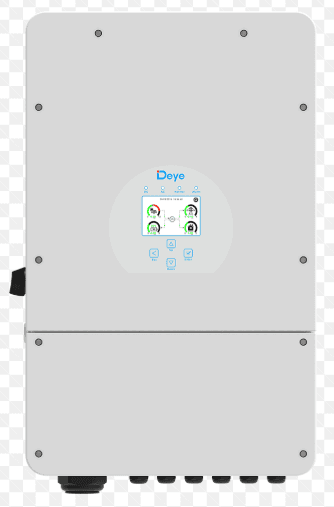
Humidity causes inverters to overheat — moisture reduces airflow through cooling vents. Clear dust from vents and confirm the cabinet seal is intact. Condensation inside the display window means call a technician today. For homes with a hybrid inverter, also check battery compartment seals.
Calibrate your expectations: 25 kWh/day in April becomes 12–17 kWh/day during July cloud cover. That's normal. A 60%+ drop on a partly cloudy day is not — that's a fault signal worth investigating immediately.
Every exterior conduit is a water entry point once its seal cracks. Squeeze test: if it feels brittle, reseal before the next storm. After heavy rain, visually confirm no moisture near your AC disconnect. This is a fire hazard, not just a performance issue.
| Maintained System | Neglected System |
|---|---|
| 3–5% annual efficiency loss | 15–20% annual efficiency loss |
| Warranty remains valid | Warranty voided without documentation |
| PHP 4,000–7,000 monthly Meralco savings protected | PHP 1,500–3,000 extra Meralco bill per month |
| PHP 1,500–3,500 yearly inspection cost | Repair bills that exceed 3 years of inspections |
| Faults caught early, repairs cheap | Moisture damage compounds silently until failure |
Kailan Ka Dapat Tumawag ng Professional? (Red Flags to Watch)
"The storm didn't damage the system. Three months of ignoring the inverter warning code did."
Take Rolando — a Batangas homeowner with a 6kW grid-tied system. After typhoon season 2025, his app showed lower-than-expected output. He chalked it up to weather. Two months later, a technician found moisture inside his combiner box. The repair bill exceeded three years of annual inspections combined. We see this pattern across every province.
Call a professional when you see: inverter error codes that persist after the storm clears; physical cracks or burn marks on any panel; generation falling more than 60% on a partly cloudy day; tripped breakers that won't reset; water inside your combiner or junction box. None of these are DIY situations.
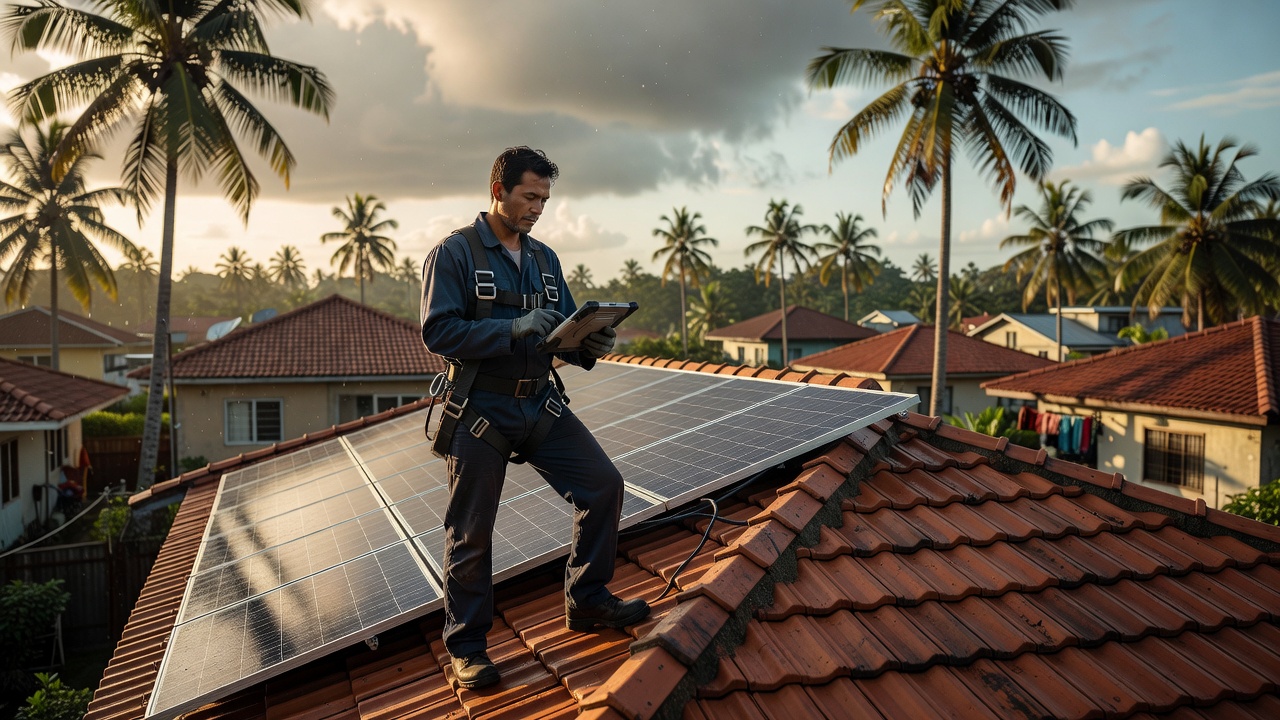
A residential professional inspection runs PHP 1,500–3,500 in Metro Manila and major urban areas — see our inspection packages for what's included. For a 5kW system saving PHP 4,000–7,000 monthly, that cost pays for itself in the first protected month.
Most solar panel warranties require documented annual maintenance to stay valid. Skip the professional inspection and you risk voiding your warranty claim entirely if a panel fails mid-season.
Quick Wins: Gawin Mo Na Ngayon Before the Next Ulap
Three things you can do this week. No tools. No ladder. No excuses.
- Download your inverter's monitoring app and screenshot today's baseline kWh generation. You need a reference point before the next stretch of cloud cover hits.
- Walk your roof perimeter from ground level with binoculars. Check for loose or tilted brackets. Five minutes. Do it now.
- Clear gutters and downspouts near your panel array. Pooling water around roof penetrations is how moisture finds its way into conduit seals.
Your solar system was built for Philippine weather — typhoons included. Neglect is what kills ROI. Thirty minutes a month on these checks protects your investment for 25 years. A well-maintained 5kW system saves PHP 4,000–7,000 monthly on your Meralco bill. A neglected one just returns that money to the grid.
Frequently Asked Questions
Do solar panels still generate electricity during Philippine rainy season?
Yes — solar panels run on daylight, not direct sunlight, so expect roughly 30–50% of your peak summer output on overcast days. A drop significantly beyond that on a partly cloudy day points to a maintenance issue, not weather.
How often should I clean my solar panels in the Philippines?
Dry season: every 4–6 weeks. Rainy season: rain handles dust, but do a manual frame clean for algae and moss once monthly — soft brush, plain water, never a pressure washer.
Will a typhoon damage my solar panels?
Panels installed to Philippine Electrical Code standards handle significant wind loads well. The real vulnerability is mounting hardware — after any Signal 2+ typhoon, a five-minute visual bracket inspection is non-negotiable.
Handa na para sa susunod na typhoon season?
Book a professional inspection with LakaSolar before the next storm system arrives. Our technicians cover Metro Manila, Cavite, Laguna, Batangas, and key Visayas areas.
Book a Free Inspection →✅ Bottom Line
- Philippine heat, humidity, and typhoons degrade solar systems faster than temperate-climate specs suggest — budget for local conditions, not manufacturer averages.
- Monthly visual checks catch 80% of problems before they become expensive. Add a formal technical inspection every 12 months.
- Inverter faults, loose connections, and soiling are the three most common culprits behind underperforming systems — all fixable if caught early.
- After any Signal 2+ typhoon, inspect mounting brackets immediately. Don't wait for the next billing cycle to notice something shifted.
- A well-maintained system in the Philippines can realistically perform above rated capacity during peak dry-season months — poor maintenance is the only thing standing between you and that output.
Quick Savings Estimate
Get a Free Quote
Custom system design